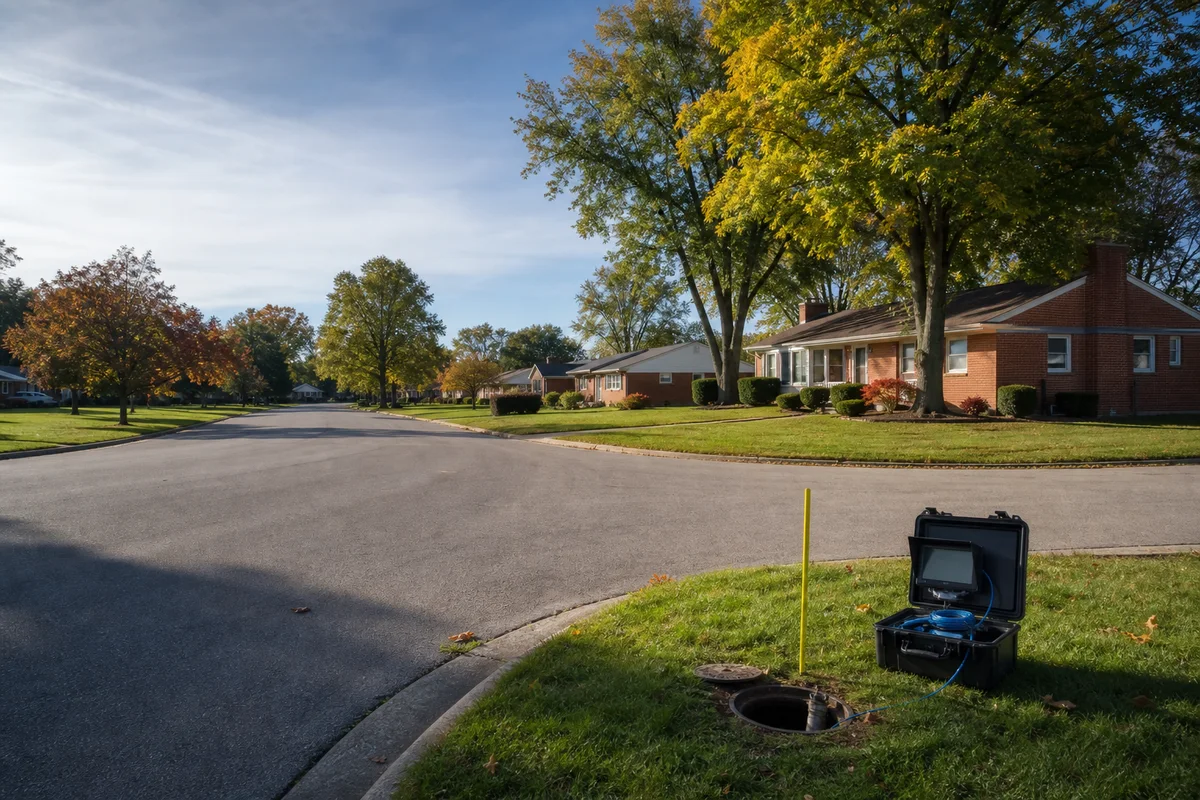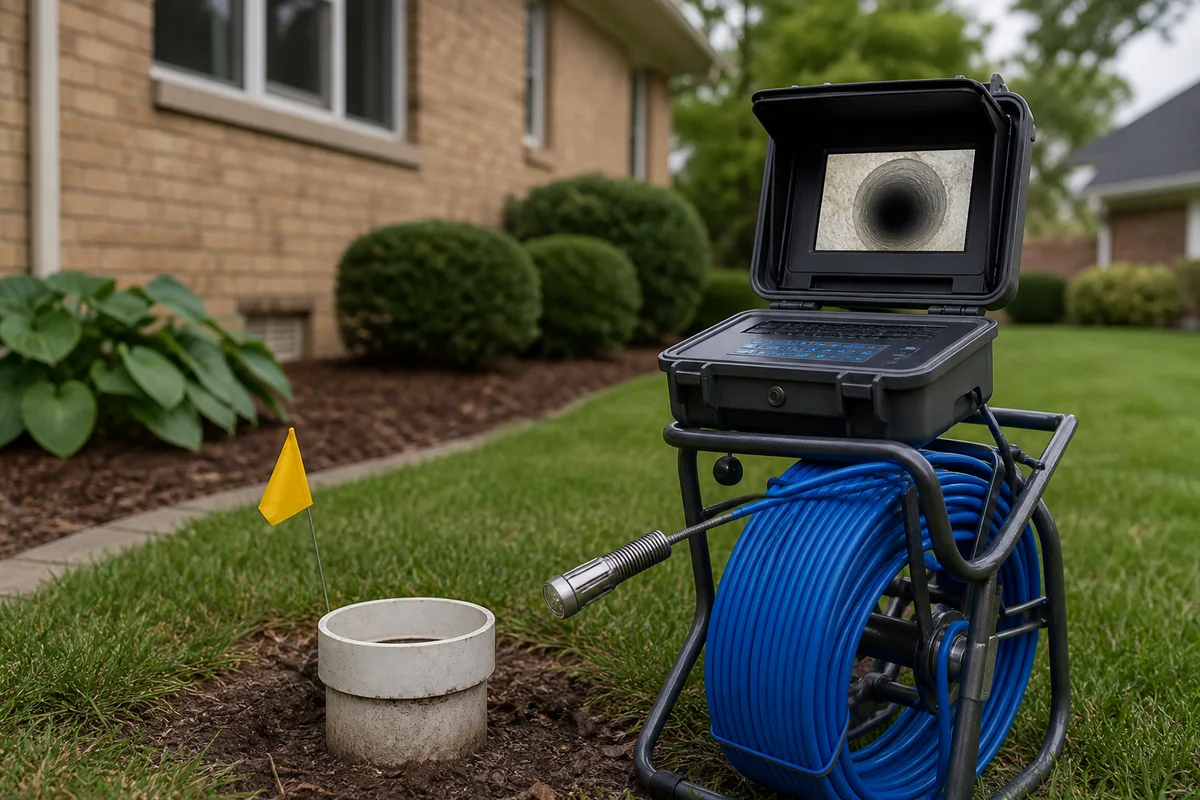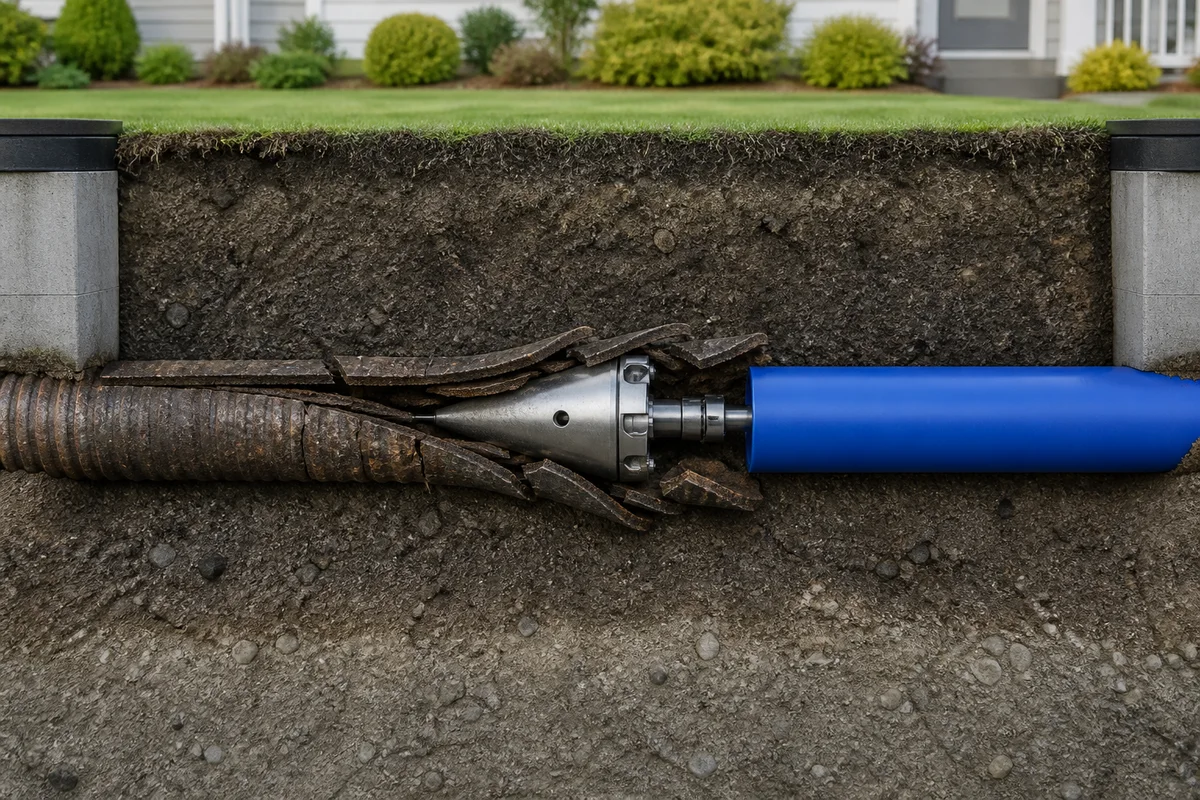
Livonia Craft Trenchless prepared this homeowner decision guide for Livonia and nearby metro Detroit communities. Use housing chronology, camera texture, geometry, joints, corrosion, and material transitions to identify the private sewer lead without guessing from age alone.
The purpose is to make a buried-pipe recommendation easier to review. It does not replace an address-level camera inspection, permit check, utility locate, or a qualified provider’s written scope.
Housing era is a clue, not a material test
Livonia and nearby postwar suburbs contain substantial mid-century housing. That makes clay, cast iron, and bituminized fiber realistic questions, but later repairs can insert plastic or replace only one segment. The camera and any exposed sample remain the property-level evidence.
Housing era is a clue, not a material test: questions for the written scope
Ask how the observation was measured, what evidence supports it, which property section it affects, which alternatives remain, and what would change the recommendation. Preserve the answer beside the footage instead of relying on a short verbal summary.
Connect the camera station to the surface before comparing access. A distance counter without a fixed reference can create a clean-looking report that still cannot guide a pit, repair endpoint, or restoration plan.
Read clay joint by joint
Vitrified clay can remain sound between joints while roots or groundwater enter one opening. A useful report records each offset, gap, intrusion, crack, and material transition with a measured station instead of summarizing the entire run as old clay.
Read clay joint by joint: questions for the written scope
Ask how the observation was measured, what evidence supports it, which property section it affects, which alternatives remain, and what would change the recommendation. Preserve the answer beside the footage instead of relying on a short verbal summary.
Compare the same inspection record across proposals. Different prices are easier to understand when cleaning, locating, access, permits, inspection, branch work, closeout evidence, and restoration appear as separate lines.
Measure Orangeburg geometry
Orangeburg can blister, delaminate, oval, or flatten. Identification should combine texture, deformation, route age, and transitions. Severe loss of shape can remove the host path a liner needs and shift the comparison toward replacement.
Measure Orangeburg geometry: questions for the written scope
Ask how the observation was measured, what evidence supports it, which property section it affects, which alternatives remain, and what would change the recommendation. Preserve the answer beside the footage instead of relying on a short verbal summary.
Connect the camera station to the surface before comparing access. A distance counter without a fixed reference can create a clean-looking report that still cannot guide a pit, repair endpoint, or restoration plan.
Descale cast iron before judging the wall
Interior cast iron can lose bore to scale and corrode at the invert or fittings. Post-cleaning footage is more reliable than a first pass through deposits because the wall and channeling must be visible before rehabilitation is evaluated.
Descale cast iron before judging the wall: questions for the written scope
Ask how the observation was measured, what evidence supports it, which property section it affects, which alternatives remain, and what would change the recommendation. Preserve the answer beside the footage instead of relying on a short verbal summary.
Compare the same inspection record across proposals. Different prices are easier to understand when cleaning, locating, access, permits, inspection, branch work, closeout evidence, and restoration appear as separate lines.
Treat PVC as newer, not immune
Plastic pipe can still settle, hold standing water, separate at a fitting, or admit roots through a bad connection. Material age never replaces a full route record and surface location of the important findings.
Treat PVC as newer, not immune: questions for the written scope
Ask how the observation was measured, what evidence supports it, which property section it affects, which alternatives remain, and what would change the recommendation. Preserve the answer beside the footage instead of relying on a short verbal summary.
Connect the camera station to the surface before comparing access. A distance counter without a fixed reference can create a clean-looking report that still cannot guide a pit, repair endpoint, or restoration plan.
Keep the transition map
The connection between cast iron, clay, Orangeburg, and PVC can concentrate movement or root entry. Preserve the station, geometry, and condition on both sides so a repair endpoint does not leave a failing transition just beyond the work.
Keep the transition map: questions for the written scope
Ask how the observation was measured, what evidence supports it, which property section it affects, which alternatives remain, and what would change the recommendation. Preserve the answer beside the footage instead of relying on a short verbal summary.
Compare the same inspection record across proposals. Different prices are easier to understand when cleaning, locating, access, permits, inspection, branch work, closeout evidence, and restoration appear as separate lines.
Keep one property record from diagnosis through closeout
A useful owner file includes the original footage, a station log, material notes, surface locations, the written recommendation, permit and inspection records, invoices, and closing evidence. The record should distinguish what was observed from what remained unknown.
When a proposal changes after cleaning or access, the revised scope should identify the newly discovered condition and explain why it changes the method, work zone, or restoration. That written decision point is more useful than a verbal field adjustment.
This website provides planning information and routes quote requests. It does not diagnose a property from a distance, guarantee a method, or replace inspection by a qualified local provider.
Use the camera inspection guide, compare all repair options, review Livonia-area coverage, or send the property context.
Primary references for this guide
- City of Livonia Water and Sewer
- City of Livonia GIS resources
- U.S. EPA trenchless rehabilitation fact sheet
Common Questions
What should I keep from a sewer inspection?
Keep the complete recording, access point, direction, measured stations, materials, defects, visibility limits, surface locations, and any written recommendation.
Can this guide determine the method for one property?
No. It is a comparison framework. The actual route, material, defects, access, utilities, jurisdiction, and current inspection record still govern the decision.
When should a sewer proposal be revised?
Revise it when cleaning, locating, access, or inspection reveals a condition that changes the selected method, work zone, permit path, or restoration.
Who owns the private sewer lead in Livonia?
The City of Livonia states that the property owner is responsible for the individual sewer lead and its connection to the city main.