Livonia Trenchless helps Berkley homeowners organize inspection findings and request repair options for a private sewer lead, roughly 15 miles from the Livonia hub. Berkley occupies a small, closely platted pocket of south Oakland County, bordered by Royal Oak, framed by Huntington Woods, and sitting within reach of Southfield and Ferndale along the Woodward Avenue, 11 Mile and 12 Mile corridors. The regional geography is easy to describe, yet the repair questions almost always begin at a single address: a reacting floor drain, a tired cleanout near the foundation, or a short run squeezed between a driveway and a planting bed.
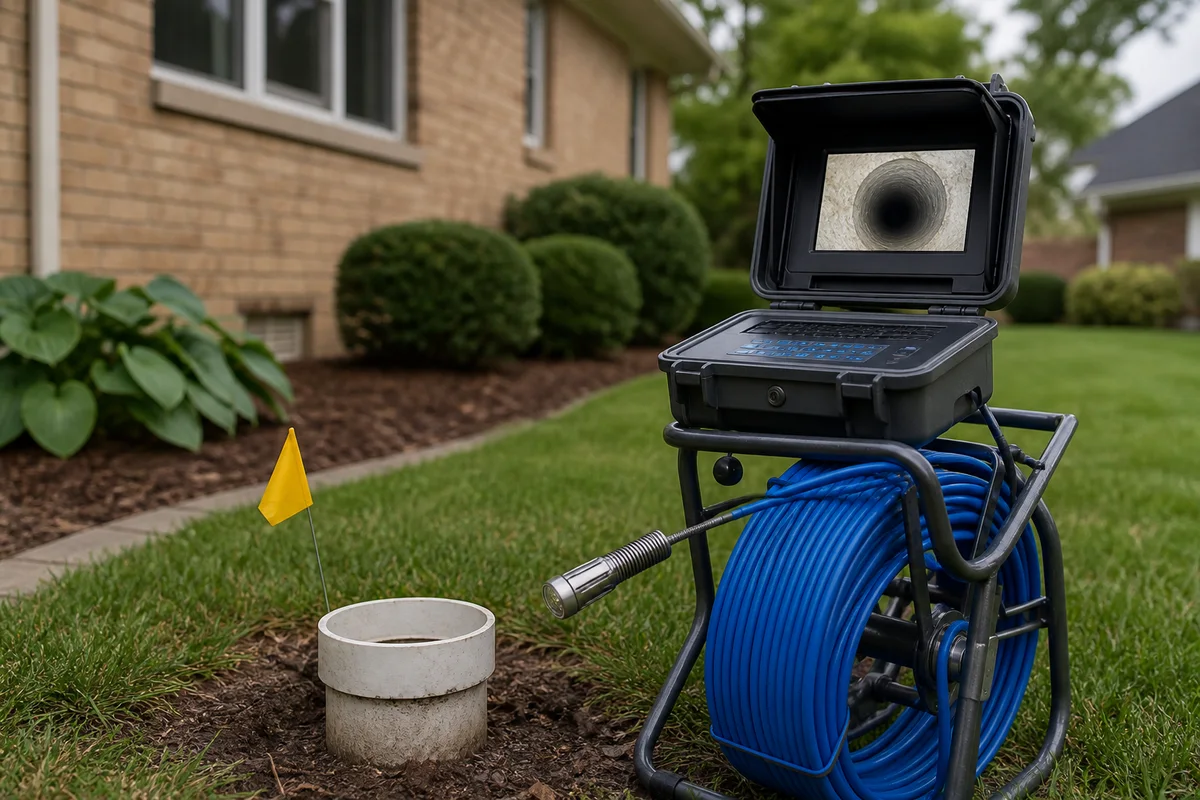
Most of the housing here took shape between the 1920s and the 1950s, a mix of brick bungalows and modest colonials on narrow lots, many with finished basements added over the decades. Clay tile and cast iron leads often remain beneath those homes, sometimes spliced with a later plastic section. The brick facade and the build era hint at what might be underground without confirming it. A sewer camera inspection turns that guesswork into a visible route and a measured condition before anyone recommends lining, bursting or a narrower fix.
Begin with the Berkley floor drain and the storm history
Let the symptom lead the investigation. A floor drain that surges during heavy rain points somewhere different from a single sink that empties slowly on a dry afternoon. Write down when the trouble appears, which openings react, and whether drainage returns on its own after the weather passes. Keep earlier invoices and any prior footage together so the next inspector can tell a repeat obstruction apart from a defect being seen for the first time.
A finished basement raises the stakes on that record. Water that reaches drywall, flooring or stored belongings is a strong reason to document the event in detail, but the damage itself does not diagnose a collapsed lead. Private blockage, pipe shape and conditions downstream can each call for a different follow-up. Dry-weather footage can expose roots or a cracked joint, yet it cannot by itself show what the serving system was doing at the height of a storm. Ask the serving utility about reported conditions when the timing suggests a wider problem, and keep that answer separate from the private-pipe findings.
Before any method enters the conversation, settle which part of the plumbing is under review. An older Berkley home may carry an interior cast iron building drain, a transition near the foundation wall and an exterior clay lead to the connection. Make that boundary explicit on paper. A proposal centered on the yard should not leave an uninspected basement section or an unseen connection quietly outside its coverage.
Map the brick bungalow lot before planning access
Berkley’s narrow lots mean a repair plan needs more than a paint mark over the damaged pipe. Sketch the house footprint, the driveway, the front walk, the mature trees and every cleanout you can find. Place the important camera findings at the surface and show how a crew and its equipment would actually reach them. A tight side passage beside a brick bungalow can be wide enough for an inspection camera while remaining too narrow for the machinery a replacement would require.
Street trees add a second layer to the plan. Roots can enter through an open joint or a crack in the pipe wall, but a canopy over the parkway does not prove where or how badly intrusion occurs. Record the real entry points and talk through how a proposed opening would disturb the surrounding ground and any curbside planting. Treat tree removal as a landscaping decision rather than an automatic sewer cure, since the defective opening stays in place unless the pipe itself is addressed.
Small yards also make restoration boundaries matter. If an opening would touch a driveway edge, a walk slab or a bed along the foundation, name that area in writing and decide who restores it. Note where spoil and new pipe would be staged and how the household keeps access to the home during the work. Those specifics let a trenchless proposal and an excavation proposal be weighed on the same lot instead of a vague promise that the disruption will be small.
Separate clay tile from cast iron in the camera record
The first camera pass should fix the starting opening, the direction of travel and the distance to each finding. Ask the operator to call out materials, joints, transitions and branches as the camera advances, and to mark where the survey ends. A Berkley lead that switches from interior cast iron to exterior clay tile deserves that transition logged by station, because the two materials carry different failure patterns and different repair implications.
Tree root removal can reopen a blocked line and clear the view, but a restored flow does not prove a joint is watertight or structurally sound. Request a second recording after cleaning that shows the newly exposed walls and joint edges. Ask whether roots appear at one isolated joint or at several points along the older run, since that count helps decide whether a spot treatment is worth comparing against rehabilitating a longer section.
The inspector should also state plainly what the survey cannot establish. Standing water can hide the invert, and an obstruction the camera cannot pass leaves the pipe beyond it unexamined. A camera does not measure exact grade or confirm clearance from nearby utilities without added investigation. Where those gaps would change the repair choice, resolve them or carry them into the scope as named conditions before the work is approved.
Qualify lining or bursting with Berkley evidence
Trenchless pipe lining may suit an older Berkley lateral that can be cleaned and still holds a usable shape and a continuous passage. Have the provider explain how the liner handles each material transition, every branch and both endpoints. Where roots have found several joints, the scope should spell out which openings the liner closes and which lengths stay outside the repair.
A liner follows the host pipe wherever it goes. It should not be offered as a way to correct a sag or to bridge an unresolved collapse. If standing water lingers after cleaning, ask what further measurement is needed and how the method answers that finding, because a smooth new interior does not fix a grade problem on its own.
Pipe bursting replaces a run along its existing path when the old material, the bends, the surrounding ground and the utility clearance all allow it. On Berkley’s compact parcels, the placement of the entry and receiving pits often decides feasibility. Request a drawing of those openings and the equipment route, supported by separate utility locating and field checks rather than an assumption that camera footage already supplies clearance. Where damage is confined to one spot, a sewer spot repair with sound pipe documented on both sides may be enough; compare a broader trenchless sewer replacement or an excavation-based sewer line repair and replacement when multiple failures or poor geometry make the shorter scope incomplete.
Confirm Berkley authority and keep the closeout file
Give the City of Berkley the property address and the proposed scope when you confirm permits, inspections and the private-to-public responsibility boundary. Describe the method, the pipe section involved and any opening planned near the public frontage, and ask who pulls the permit, who schedules inspection and who signs off at the end. If a county facility or drain enters the picture, establish the relevant Oakland County Water Resources coordination before work begins. A Livonia or Wayne County practice does not set the requirements for a Berkley connection.
Compare proposals against one shared inspection record, with preparation, access, pipe treatment, branch work, utility coordination, inspection and restoration each on its own line. Ask how a concealed obstruction, a changed material or a conflicting utility would move the scope before any of them is encountered. After the work, keep the closing footage showing the treated stations, endpoints and transitions, along with the written description, applicable permit and inspection records, restoration terms and any section still left for later attention, since visible flow alone is not a complete structural closeout.
Send the symptoms, the rainfall timing, prior work and available video through the contact form. Nearby guides for Royal Oak, Southfield and Ferndale add further south Oakland County context, while each Berkley property still needs its own findings, measured access plan and method assessment. Browse the full list of area guides for the wider Oakland and Wayne County coverage, then have a qualified local provider confirm conditions before a final method is selected.
South toward the Detroit border, Oak Park offers a nearby guide to inspecting offset clay joints beneath compact brick-ranch lots before planning repair access.
When a sewer problem surfaces in Berkley, many owners begin with emergency sewer repair in Livonia or sewer backup repair for Berkley homes before the cause is confirmed. From the same camera record you can also weigh under-slab sewer repair in Livonia, trenchless water line replacement across metro Detroit, storm drain pipe repair, and a pre-purchase sewer inspection near Livonia.
Nearby areas we serve around Berkley: trenchless sewer repair in Royal Oak, trenchless sewer repair in Clawson, trenchless sewer repair in Oak Park, trenchless sewer repair in Birmingham, trenchless sewer repair in Southfield, trenchless sewer repair in Ferndale. The same address-first camera record and method comparison apply across these communities in metro Detroit.
Frequently asked
01My finished Berkley basement took on water through the floor drain after a storm. Where does the inspection start?
Note which drain reacted, how high the water rose against the finished floor and whether it drained back on its own as the rain eased. Begin the camera survey at the nearest usable opening and trace toward the street. Footage taken once the water clears can reveal a defect in the lead, but it cannot reconstruct how the system behaved while the storm was running.
02Can a camera tell the difference between the clay tile and cast iron sections under my Berkley lot?
Yes, a careful operator should call out each material change on the recording and log the distance where it occurs. Clay tile joints and corroding cast iron fail in different ways, so the report should describe what it sees at each section rather than labeling the whole run with one condition.
03A city tree sits between my Berkley curb and sidewalk. Does that prove roots are in my lateral?
No. A nearby tree raises the question but does not answer it. The useful evidence is a root mass visible inside the pipe at a measured station, tied to a surface point. Document the actual entry before anyone proposes removing a tree or lining a section on the strength of its location alone.
04Does living near Woodward or the 11 or 12 Mile line change who I contact for permits?
A boundary does not settle the serving utility or who approves the work. Confirm the connection and the permit authority for your exact Berkley address with the city before comparing proposals, and keep that answer with the inspection record rather than assuming a neighbor's arrangement applies.
05The finished basement makes an interior opening awkward. Can the whole repair stay outside?
Sometimes, but not always. Identify where the building drain transitions to the exterior lead and inspect both. An outdoor-only scope may leave an interior cast iron section unexamined, so ask for separate findings and clearly marked repair endpoints before assuming one proposal covers the finished space.