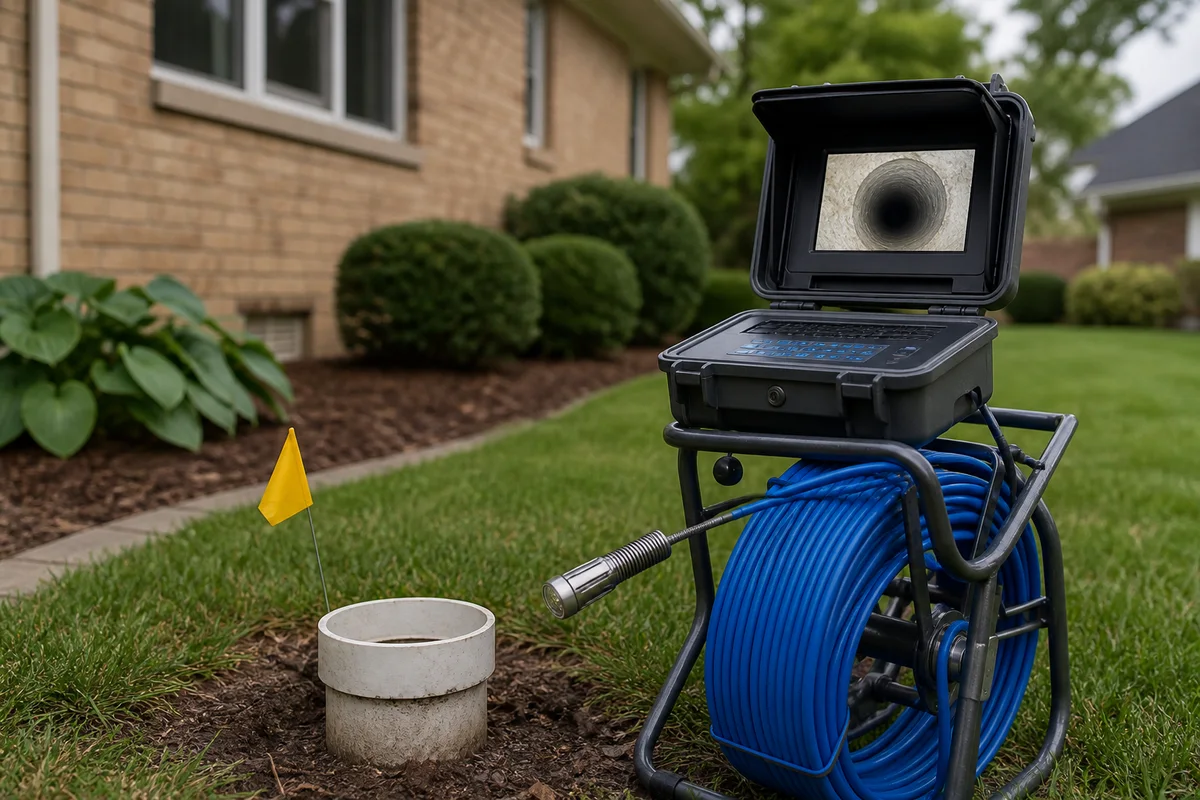
Livonia Trenchless helps Oak Park homeowners prepare for sewer lateral inspection and compare repair scopes. Oak Park is an inner-ring south Oakland County city on Detroit’s 8 Mile border, between Ferndale, Berkley and Southfield. Its largely post-war brick ranches and bungalows often put a basement beneath a small lot, with a front walk, driveway and mature street trees sharing the ground above an older sewer lead. That combination makes the location of a defect as consequential as the defect itself.
The approximate 14-mile distance from the Livonia hub is a planning marker. The useful starting point is the property: where wastewater leaves the basement, where inspection equipment can enter and what lies over the route. A sewer camera inspection should supply evidence for those decisions before a provider recommends lining or bursting. Housing style can suggest questions about clay tile and cast iron, but it cannot identify the material beneath an individual ranch.
When rain brings water through the basement floor drain
A floor-drain backup after heavy rain deserves a clear account of what happened inside the house. Note whether water emerged at the floor drain first, whether a laundry fixture or toilet also reacted and whether normal household use had caused trouble beforehand. Photographs taken from a safe, dry location and earlier service records can help the inspector understand the sequence. Keep people away from backed-up wastewater and describe any loss of usable basement space when requesting service.
Do not turn the weather connection into a diagnosis. Roots restricting a private lateral, a damaged joint and conditions beyond the inspected pipe require different responses. Ask the provider to distinguish an observed obstruction from a suspected explanation for the storm event. If the private inspection leaves the wet-weather question unresolved, ask the serving utility what address-specific follow-up is appropriate. This guide makes no claim about Oak Park’s sewer configuration or any municipal program.
Restoring drainage may be the immediate task. Ask what was cleared, where it was found and whether a recording exists from before the blockage was disturbed. An emergency visit can leave a useful starting record even when a complete survey must follow later. Label any recommendation made with limited visibility as provisional, particularly if water or debris prevents the camera from reaching the connection.
Read the clay joint and the cast iron wall separately
On an older Oak Park lot, clay tile outside and cast iron nearer the basement may need different preparation and repair. Have the operator identify the accessible interior drain, the foundation transition and the exterior lead wherever visible. A material change should appear in the report with its distance from the stated starting point. That lets a homeowner see whether the proposed work covers the actual trouble or stops before it.
Clay sections can shift so that adjoining edges form a step. Roots may enter an opening at that same joint and obscure the displacement. The report should describe both findings rather than reducing everything to a root problem. Ask whether the camera passes the step, whether it catches debris and what becomes visible after cleaning. Cast iron requires its own description of deposits, corrosion and visible wall condition; a rough-looking surface and a missing section of wall are different observations.
Arrange tree root removal around an inspection plan. Cutting an obstruction can restore a passage without sealing its entry. Once the view improves, obtain footage that shows the exposed joint edges and surrounding pipe. Mature street trees make root entry a sensible inspection question in Oak Park, but the location of a trunk or raised pavement does not establish which joint has failed. Preserve the actual entry locations before discussing a lasting repair.
Turn a tight front yard into a workable access drawing
A small ranch lot can leave little room between the foundation, walk and driveway. Before accepting a promise about avoiding a full dig, have the provider draw the proposed access openings on a property sketch. Include equipment placement, movement of removed material and the path residents will use. A camera fitting through a cleanout does not establish that lining equipment or a bursting setup can work from that opening.
Tie important findings to surface locations, especially where a proposed opening approaches paving or tree roots. Ask which locations were confirmed in the field and which remain estimates. The camera image alone cannot establish safe separation from buried utilities. Utility locating and any additional field investigation should be assigned in the scope before an excavation or displacement method proceeds.
Driveway access deserves a direct conversation. If a vehicle must move before equipment arrives, make that part of the schedule. Identify whether a concrete edge, front step approach or planting bed lies inside the work zone and who restores it. For an Oak Park household using its basement for laundry or storage, also ask about interior protection and the expected interruption to drain use. These practical details can change the choice between otherwise plausible methods.
Require a repair explanation for the observed offset
Trenchless pipe lining creates a rehabilitated interior within suitable existing pipe. Qualification depends on cleaning, usable geometry and a continuous installation path. On a clay lead with offset joints, ask the provider to explain how each displaced edge affects preparation and installation. A liner follows the remaining route; it does not move clay sections back into alignment or raise a low section holding water.
Branches and endpoints need equal attention. The written plan should identify the beginning and end of the treatment, how connected drains are handled and which older sections remain. If a section beneath the basement is excluded, make that exclusion visible alongside its inspection findings. A yard repair can be useful without resolving a separate cast iron problem inside the house, provided the homeowner understands the boundary.
Pipe bursting offers a replacement approach when the old pipe, bends, ground conditions and utility clearance permit it. In Oak Park’s compact front yards, entry and receiving openings can determine feasibility. Request their locations before comparing disruption. If an isolated displaced joint requires an opening anyway, compare a sewer spot repair supported by serviceable pipe on either side. Wider damage may justify evaluating trenchless sewer replacement or sewer line repair and replacement, including excavation where necessary.
Put unanswered questions beside the proposed work
An incomplete survey should lead to a defined next step. Ask what would resolve a hidden section, standing water or an uncertain bend, and whether that investigation must precede method selection. Keep assumptions next to the affected scope item so they are easy to revisit. A proposal should explain how discovery of a collapse, different material or utility conflict changes the work and who authorizes that change.
Confirm the applicable permit and inspection requirements with the City of Oak Park using the property address and planned method. Ask about the responsibility boundary, public-frontage access and any further authority that must be consulted. An 8 Mile location does not answer those questions, and practices used at a Wayne County property should not be carried into an Oakland County scope without confirmation. Retain the address-specific direction with the proposal.
At completion, request a recording that can be compared with the original findings. It should identify the repaired section, transitions, branch treatment where applicable and any limits that remain. Keep that footage with the scope, material information, inspection records and restoration agreement. Check the surface work as well as the drainage: the closeout should account for the driveway edge or front walk promised in the access plan.
Request help for an Oak Park lateral
Use the contact form to share the backup history, available footage and access concerns before requesting repair options. Guides for nearby Ferndale, Berkley and Southfield offer additional local planning context. Your Oak Park lead still needs its own recorded findings and a qualified provider’s method assessment. The service-area directory covers the wider Oakland and Wayne County area for homeowners coordinating work at another property.
When a sewer problem surfaces in Oak Park, many owners begin with emergency sewer repair in Livonia or sewer backup repair for Oak Park homes before the cause is confirmed. From the same camera record you can also weigh under-slab sewer repair in Livonia, trenchless water line replacement across metro Detroit, storm drain pipe repair, and a pre-purchase sewer inspection near Livonia.
Nearby areas we serve around Oak Park: trenchless sewer repair in Ferndale, trenchless sewer repair in Southfield, trenchless sewer repair in Berkley, trenchless sewer repair in Royal Oak, trenchless sewer repair in Hazel Park. The same address-first camera record and method comparison apply across these communities in metro Detroit.
Frequently asked
01Should I wait for another storm to investigate an Oak Park floor-drain backup?
An inspection can document the accessible private pipe before another rain. Save the timing and affected-drain details from the earlier event, and tell the provider whether ordinary household use also causes trouble. The footage may reveal a restriction, but a dry-weather survey cannot establish every cause of a wet-weather backup.
02What does an offset clay joint mean for a proposed liner?
Ask how much of the passage the displaced joint obstructs and whether preparation can leave a suitable route for installation. A liner does not realign the clay sections. A substantial step may require a localized opening or a different repair, based on the cleaned footage and field assessment.
03Can the driveway stay usable during trenchless work at my Oak Park ranch?
That depends on access, equipment and the proposed openings. Have the provider mark the staging area and explain when vehicles must move, where residents can walk and whether any paving must be removed. A trenchless method can still occupy a small driveway even when the pipe repair stays beneath it.
04Why request footage after roots have been cleared from the lateral?
Roots can conceal the joint edges and pipe wall needed to judge repair options. A post-cleaning recording should show whether a crack, displaced joint or other opening remains, and identify any section still hidden by water or debris. Improved drainage alone does not answer those structural questions.
05Does a sewer report from a neighboring Oak Park house help choose my repair?
It can suggest questions about materials and access, but it cannot establish your lateral's route or condition. Even similar brick ranches can have different additions, earlier repairs and cleanout arrangements. Base the scope on footage and surface locations from your own property.