Livonia Trenchless offers homeowner repair guidance and quote routing for Ferndale, approximately 18 miles from the Livonia hub. This dense south Oakland County city sits along the 8 Mile edge, south of Royal Oak and west of Madison Heights. Its early twentieth-century bungalows and small lots bring sewer decisions close to basement walls, driveways, walks and mature street trees. An older clay or cast-iron lateral deserves a careful look, but the house’s age alone cannot establish what remains underground.
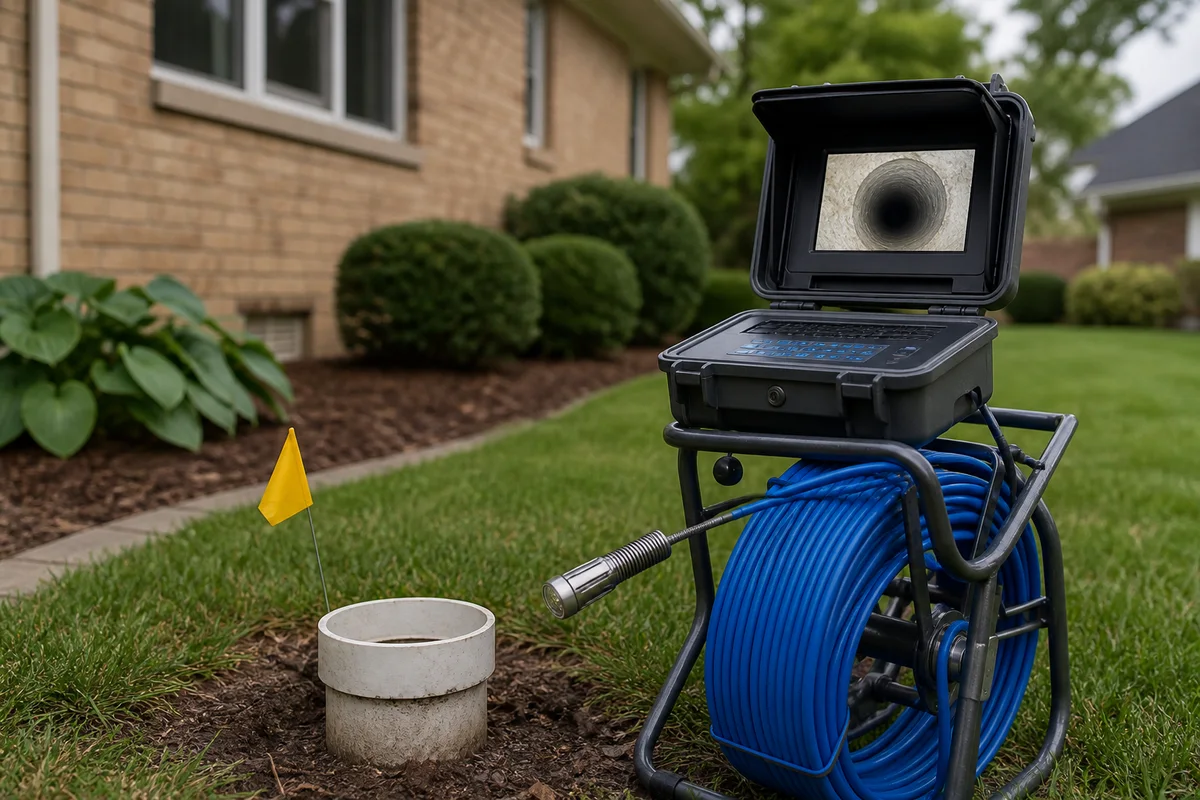
Start with a sewer camera inspection when recurring blockages or basement backups raise concerns about the private sewer lead. The goal is a usable record of the pipe and its limitations before selecting lining, bursting or excavation. Ferndale’s compact setting makes that sequence especially useful: discovering a material transition or inaccessible bend before planning an opening can change the entire repair layout.
Start with the Ferndale basement and the backup history
Describe which drains are affected and when the trouble occurs. A single slow sink calls for a different investigation from water rising at several basement fixtures. Record whether the problem follows heavy rain, appears during ordinary household use or returns shortly after cleaning. Keep previous invoices and footage together so the next inspector can distinguish a repeat obstruction from a newly observed defect.
A rain-related basement backup is a symptom, not a diagnosis of a collapsed lateral. Private blockage, pipe geometry and conditions farther downstream may require different follow-up. Camera footage taken after water recedes can reveal roots or damaged joints, but it cannot by itself prove what happened throughout the serving system during the storm. Ask the serving utility about reported conditions when relevant and keep those answers separate from the private-pipe findings.
Before comparing methods, identify the inspection access and which portion of the plumbing is under review. An older bungalow may have an interior cast-iron building drain, a transition near the foundation and an exterior clay lead. Make the boundary between those sections explicit. A proposal focused on the yard should not leave uncertainty about an uninspected basement section or the connection beyond the survey limit.
Small lots require a measured access plan
Ferndale’s close residential spacing means a repair plan needs more than a mark over the damaged pipe. Sketch the house, driveway, front walk, trees and available cleanouts. Locate important camera findings at the surface and show how workers and equipment could reach them. A narrow passage beside a bungalow can be usable for inspection access while still being unsuitable for the equipment contemplated in a replacement proposal.
Mature street trees add another planning question. Roots may enter an existing opening in a joint or pipe wall, but a nearby tree does not prove the location or severity of intrusion. Document the actual entry points and discuss how proposed access would affect the surrounding ground. Avoid treating tree removal as an automatic sewer remedy when the defective opening would remain in place.
Small yards also make restoration boundaries consequential. If an opening affects a walk, planting bed or driveway edge, identify the affected area in writing. Clarify where materials will be staged and how access to the home will be maintained. Those details help compare trenchless and excavation proposals on the same property instead of relying on a general promise of minimal disruption.
Inspect the pipe again after clearing roots
The initial camera pass should identify the starting opening, travel direction and distance to each visible finding. Record materials, joints, transitions, branches and the point where inspection ends. For a Ferndale lateral with recurring roots, preserve footage of the obstruction before cleaning when available, then obtain a second record showing what can be seen after the obstruction is removed.
Tree root removal can reopen a drain and improve visibility, but restored flow does not show that a joint has become watertight or structurally sound. Ask whether roots appear at one isolated opening or at several stations along the older run. The answer helps define whether a localized repair deserves comparison with rehabilitation of a longer section.
The inspector should state what remains unknown. Standing water can conceal the lower pipe wall, and an impassable obstruction leaves downstream pipe unexamined. A camera also cannot establish hidden utility separation or precise grade without additional investigation. If those uncertainties affect the repair choice, resolve them or identify them as conditions in the scope before approving the work.
Choose lining or bursting only when the route qualifies
Trenchless pipe lining may suit an older Ferndale lateral that can be cleaned and retains usable shape and continuity. Ask how the proposed liner handles material transitions, branches and both endpoints. Where roots have entered multiple joints, the scope should explain which openings the liner will address and which sections remain outside the repair.
Lining follows the host pipe’s path. It should not be presented as a way to lift a sag or pass through an unresolved collapse. If standing water persists after cleaning, ask what further measurements are needed and how the proposed method addresses the resulting finding. A smooth interior surface alone does not settle a grade problem.
Pipe bursting replaces a run along its existing route when the old material, bends, surrounding conditions and utility clearance allow it. Ferndale’s small lots make entry and receiving pit placement central to that assessment. Request a drawing that shows those openings and the equipment route, with separate utility locating and field checks rather than assuming camera footage supplies clearance information.
An isolated defect may instead support a spot repair when serviceable pipe is documented on either side. Compare broader trenchless sewer replacement or sewer line repair and replacement if several failures, poor geometry or access constraints make the shorter scope incomplete. Controlled excavation remains a practical option where the prerequisites for lining or bursting are missing.
Confirm Ferndale responsibility and approval requirements
Give the City of Ferndale the property address and proposed work details when confirming permits, inspections and the private-to-public responsibility boundary. Include the method, affected pipe section and any planned surface openings. Ask who obtains approvals, schedules inspection and documents completion. Being near 8 Mile or another municipal boundary does not establish the serving utility or authorize work in a public frontage.
If the scope raises a county facility or drain question, confirm the relevant involvement with Oakland County Water Resources. Do not apply a Wayne County or Livonia rule to a Ferndale address simply because the guidance comes from a Livonia-based site. Keep the address-specific direction with the inspection record so the repair proposal reflects the actual authority and connection involved.
East toward Hazel Park, compact bungalow and postwar frame-home lots raise additional questions about root-entry locations and the space needed to reach a sewer lead.
Northwest near Huntington Woods, Berkley shares Ferndale’s early twentieth-century brick housing and small-lot access constraints, though its finished basements and clay tile leads still call for their own measured inspection.
West along the same 8 Mile edge, Oak Park leans toward post-war brick ranches on small lots where offset joints and root entry under street trees still have to be filmed on that property rather than read across from Ferndale.
Compare complete scopes and keep the closing record
Request proposals using the same footage and measured findings. Include cleaning, locating, access, utility coordination, pipe treatment, branch work, inspection and restoration. On a compact Ferndale bungalow lot, identify any interior protection and the exact paved or landscaped areas affected. Ask how an unseen obstruction, different material or conflicting utility would change the work before those conditions are encountered.
After repair, retain closing footage that identifies the repaired stations, endpoints and transitions. Keep material information, applicable permit and inspection records, restoration terms and any remaining inspection limits in the property file. Emergency clearing and permanent structural work should have distinct descriptions so restored drainage is not mistaken for completion of every recommended repair.
Send the symptoms, rainfall timing, previous work and available video through the contact form. Nearby guides for Royal Oak, Clawson and Madison Heights offer additional Oakland County context, while Ferndale’s older bungalow lots still require their own measured inspection and access plan. Browse all service areas for the wider Oakland and Wayne County coverage, then have a qualified local provider confirm conditions before selecting a final method.
When a sewer problem surfaces in Ferndale, many owners begin with emergency sewer repair in Livonia or sewer backup repair for Ferndale homes before the cause is confirmed. From the same camera record you can also weigh under-slab sewer repair in Livonia, trenchless water line replacement across metro Detroit, storm drain pipe repair, and a pre-purchase sewer inspection near Livonia.
Nearby areas we serve around Ferndale: trenchless sewer repair in Oak Park, trenchless sewer repair in Hazel Park, trenchless sewer repair in Royal Oak, trenchless sewer repair in Madison Heights, trenchless sewer repair in Berkley. The same address-first camera record and method comparison apply across these communities in metro Detroit.
Frequently asked
01What should I record when a Ferndale basement backs up during a storm?
Note when rainfall began, which fixtures were affected, whether neighbors reported trouble and how the water receded. Share that history with the inspector and serving utility. A later camera survey can document visible pipe defects but cannot reconstruct storm-time system capacity by itself.
02Why can roots return after a Ferndale sewer has been cleared?
Clearing removes the obstruction without necessarily sealing the joint or crack that admitted it. Ask for post-cleaning footage showing each entry point, its measured location and the condition of nearby pipe before deciding whether another cleaning or a structural repair is appropriate.
03How can a narrow bungalow driveway affect a bursting proposal?
The proposal needs an equipment route, pipe handling space and locations for both access pits. Measure those against the actual driveway, house and neighboring improvements; a short buried run does not guarantee enough working room.
04Should an old cast-iron section inside the basement be included with an exterior liner?
Identify the transition and inspect both sections. An exterior lining scope may leave an interior building drain untouched, so request separate findings and clearly marked repair endpoints rather than assuming one proposal covers both.
05Can a sewer inspection help before landscaping a small Ferndale yard?
Yes. Locating the lateral and documenting accessible cleanouts before new planting or paving helps preserve future access. The inspection should identify observed defects without promising that healthy pipe will never need repair.